 EN


When you hear the phrase “Chinese tea,” something infinitely distant and mysterious appears before your eyes. And if you add the word “oolong” to it, an unprepared person can be hit by a mild panic. In reality it is not so scary. The world of oolongs is diverse, but it is organized quite logically. To avoid drowning in this variety, it is enough to grasp a few key principles. And then the phrase “I want to try oolong tea” will gain a very concrete taste and aroma for you.
First, remember the main thing: oolong is not a variety but a whole category of tea, which the Chinese call “blue-green” or “turquoise” tea. These are semi-fermented teas that occupy an intermediate position between green and black tea. The degree of fermentation can range from 10 to 70 percent, so completely dissimilar members live side by side within this group. What unites them is a complex production technology with the key process of “zuoqing” — repeated shaking of the leaves, which makes the edges of the leaf turn red while the middle stays green.

Four regions — four characters
Chinese tea masters joke that oolong, like a person, is a product of its birthplace. The geographic principle is considered the main one in classifying these teas. Four historical areas are singled out, each producing tea with an unmistakable character.
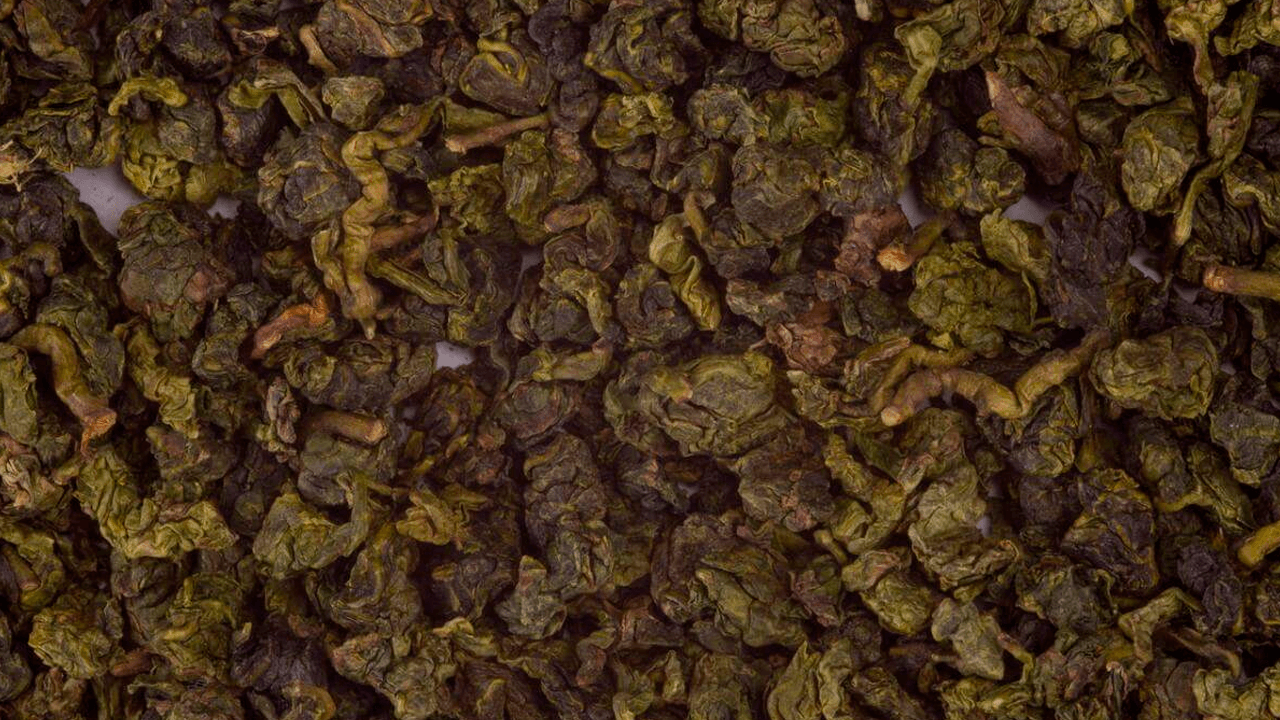
Southern Fujian gave the world its best-known representative — Tie Guan Yin, which translates as “Iron Goddess of Mercy.” It is the benchmark of light oolong, with dense leaves rolled into tight green balls. When brewed, it unfolds a heady floral aroma with lilac notes and a buttery, slightly sweet taste. Close relatives are produced here too: Ben Shan, Mao Xie and Huang Jin Gui.
In northern Fujian, in the area of the Wuyi mountains, lies the kingdom of cliff oolongs. This is a completely different story. The most famous local resident is Da Hong Pao (“Big Red Robe”), overgrown with legends and myths. The leaves here are rolled not into balls but into long, dark strips. The taste of cliff teas is rich and dense, with notes of roasted nuts and chocolate and the famous “cliff character.”
Guangdong province is famous for its phoenix oolongs — Dan Cong. The name translates as “Single Bushes from Phoenix Mountain,” and this is no accident. Each tree here grows separately and has a unique aroma. Masters pick the leaves individually from each bush, creating single-variety teas. Feng Huang Dan Cong has a bright floral-fruity aroma that lasts incredibly long — up to 20 infusions.
Taiwan is a separate chapter in the history of oolong. Island oolongs have won over gourmets with their purity of taste and high-mountain origin. The best varieties grow at an altitude of over 1000 meters, where fog and temperature swings make the leaf juicy and fragrant. The famous Alishan gives a soft, buttery infusion with milky and floral notes. Dong Ding, one of the oldest Taiwanese varieties, is known for its layered complexity and long sweet aftertaste.
Table of key types
To get your bearings quickly in this variety, just look at this table. It gathers four polar representatives that give a full picture of the oolong spectrum.
| Variety | Region | Type | Main flavor feature |
| Tie Guan Yin | Southern Fujian | Light | Lilac, creamy sweetness, flowers |
| Da Hong Pao | Northern Fujian | Dark | Chocolate, caramel, roasted nuts |
| Feng Huang Dan Cong | Guangdong | Medium | Fruit, honey, long aftertaste |
| Alishan | Taiwan | Light | Milk, flowers, buttery softness |
Light versus dark
If the geographic classification seems complicated, you can take a simpler path. All oolongs are divided into two large groups by degree of fermentation and appearance: light and dark.
Light oolongs look like green tea at first glance, with one caveat: their leaves are always crumpled and rolled into dense lumps. The degree of fermentation here is low — from 10 to 30 percent. When brewed, they give a clear golden-greenish infusion with a bright floral-fruity aroma. The taste lacks the grassy sharpness typical of green tea — only softness, sweetness and a long floral aftertaste.
Dark oolongs are the complete opposite. They go through an additional processing stage — heating over charcoal. The leaves are rolled into thick dark strips resembling twisted tobacco leaves. The degree of fermentation reaches 50–80 percent. The infusion turns out dark, thick, with a cognac hue. The aroma and taste have notes of chocolate, caramel, dried fruit, spices and wood smoke.
Light and dark oolong are not just different degrees of fermentation. They are two different languages of tea. The first speaks to you in the language of flowers and morning dew. The second speaks in the language of old whisky, cocoa and autumn bonfire smoke. Both are beautiful, but you need to listen to them in different moods. You can’t go wrong — you will sense for yourself which one to reach for today.
Hanna Vasileuskaya, editor of the Tea24 online store blog
Interestingly, historically dark oolongs appeared before light ones. One day the masters simply realized that fermentation could be stopped earlier, and discovered a whole world of new flavors.
Flavored and aged
There are two more categories that stand apart. Flavored oolongs are teas with natural or synthetic flavorings added. The most popular is milk oolong. It is important to understand: real milk oolong (the Jin Xuan cultivar, developed in Taiwan) has a light creamy hint thanks to special selection and processing. But the cloyingly creamy tea sold in supermarkets is the result of added flavoring.
Besides milk oolong, there are oolongs with ginseng, osmanthus, rose or even mango. Chinese connoisseurs are lukewarm about such experiments, believing that real oolong needs no embellishments. However, for a beginner, flavored versions can be a gentle entry into the world of oolongs.
Aged oolongs (Lao Cha) deserve separate attention. These are teas stored for years and sometimes decades. Over time they lose their sharpness and gain a deep, enveloping taste with notes of prune, cocoa and old wood. The best-known representative is Lao Tie Guan Yin (the old Iron Goddess). Such tea is highly valued and is drunk quite differently from its young sibling.
Here are five kinds of oolong worth trying for anyone who wants to understand the diversity of this category:
- Tie Guan Yin — a classic light representative for getting acquainted with floral notes.
- Da Hong Pao — a powerful dark oolong that reveals the idea of “cliff taste.”
- Feng Huang Dan Cong — for those who want to feel fruity complexity and a long aftertaste.
- Alishan — Taiwanese tenderness and the purity of high-mountain tea.
- Dong Fang Mei Ren — an experimental heavily fermented variety with a honeyed character.
How to choose your oolong
Understanding oolongs is easier than it seems. Just remember that light oolongs are about flowers, fruit and spring freshness. Dark ones are about depth, spices and the coziness of a warm evening. Chinese ones are about power and character. Taiwanese ones are about refinement and purity.
When choosing, pay attention to three key points:
- Appearance. The leaves should be whole, without stems and debris. Light oolongs have tight glossy balls, dark ones have neat rolled sticks.
- Dry aroma. Quality tea smells pleasant, without sourness or mustiness. Light varieties have a delicate floral aroma, dark ones a rich aroma with chocolate notes.
- Harvest date. Fresh oolong keeps for no more than a year or two (aged varieties are an exception). The younger a light oolong, the brighter its taste.
It is best to try oolongs with the multiple-infusion method, using small teaware (a gaiwan or a Yixing clay teapot). The water temperature for dark varieties is about 90–95 degrees, for light ones 80–85. A good oolong withstands 5 to 10 infusions, and each new infusion will reveal something new in it.
Start with the classic representatives of each group, listen to your own sensations — and you will surely find “your” oolong. The very one for which you will want to hold an evening ceremony and put everything else aside.
Frequently asked questions about types of tea
What types of Taiwanese oolongs are there, and are they similar to Chinese ones?
Taiwanese oolongs, like Chinese ones, are divided into light (green) and fermented (dark), but they differ in processing features and taste. Among the best-known types: Dong Fang Mei Ren (with floral notes), Alishan (soft, creamy), Lishan (fresh, with hints of honey) and Shan Lin Xi (rich, with fruity accents). Taiwanese oolongs are often more aromatic and delicate than Chinese ones thanks to the local climate and growing traditions. Many of them are produced using Chinese techniques, but with local nuances.


