 EN


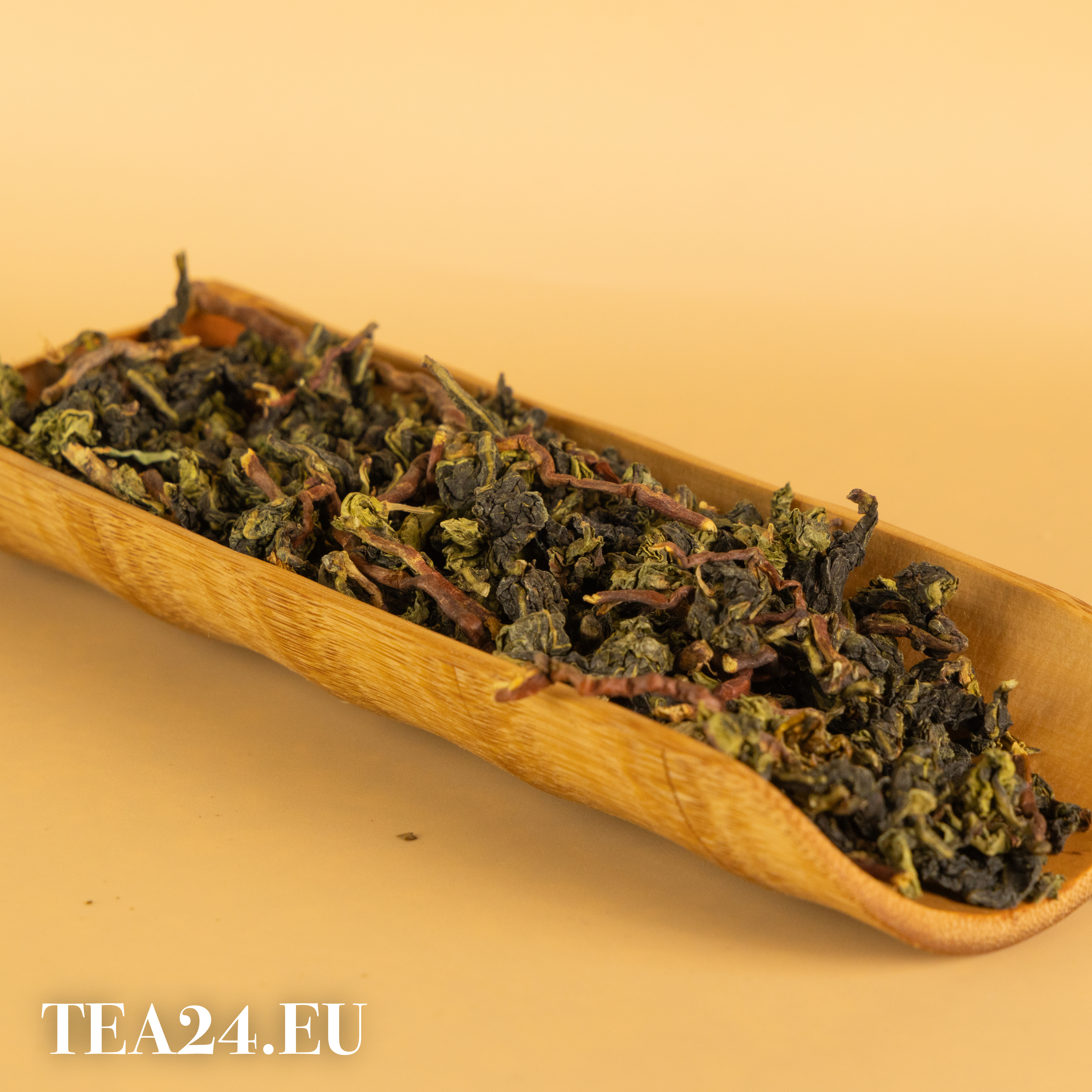


Tie Guan Yin with Stems from Xianghua (祥华铁观音有叶柄) is an oolong from Anxi County, Fujian province. The name Tie Guan Yin translates as "Iron Goddess of Mercy." The mark "Xianghua" points to a high-mountain village at an elevation of more than 900 meters, known for teas with a strong flavor and a lasting yet soft aroma.
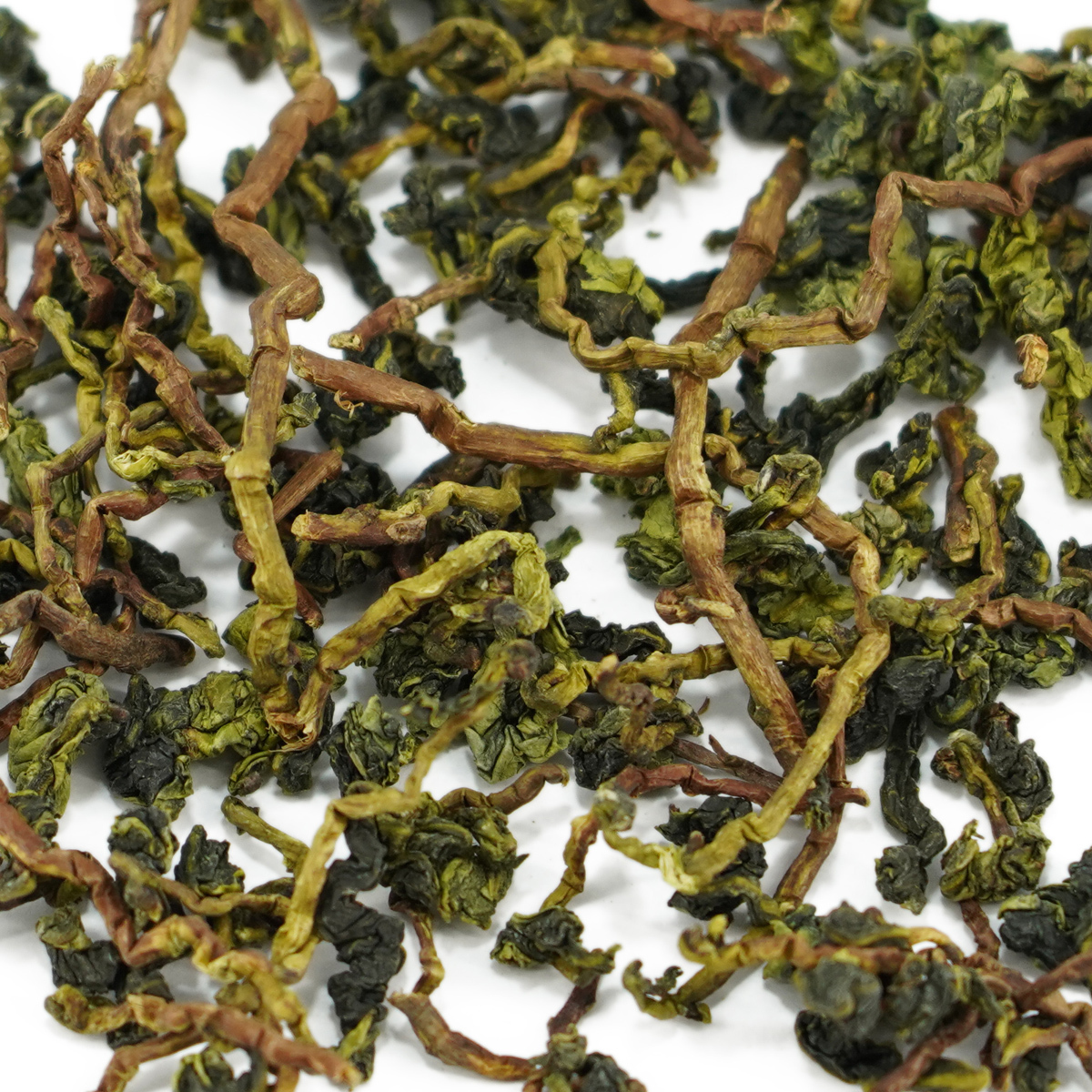
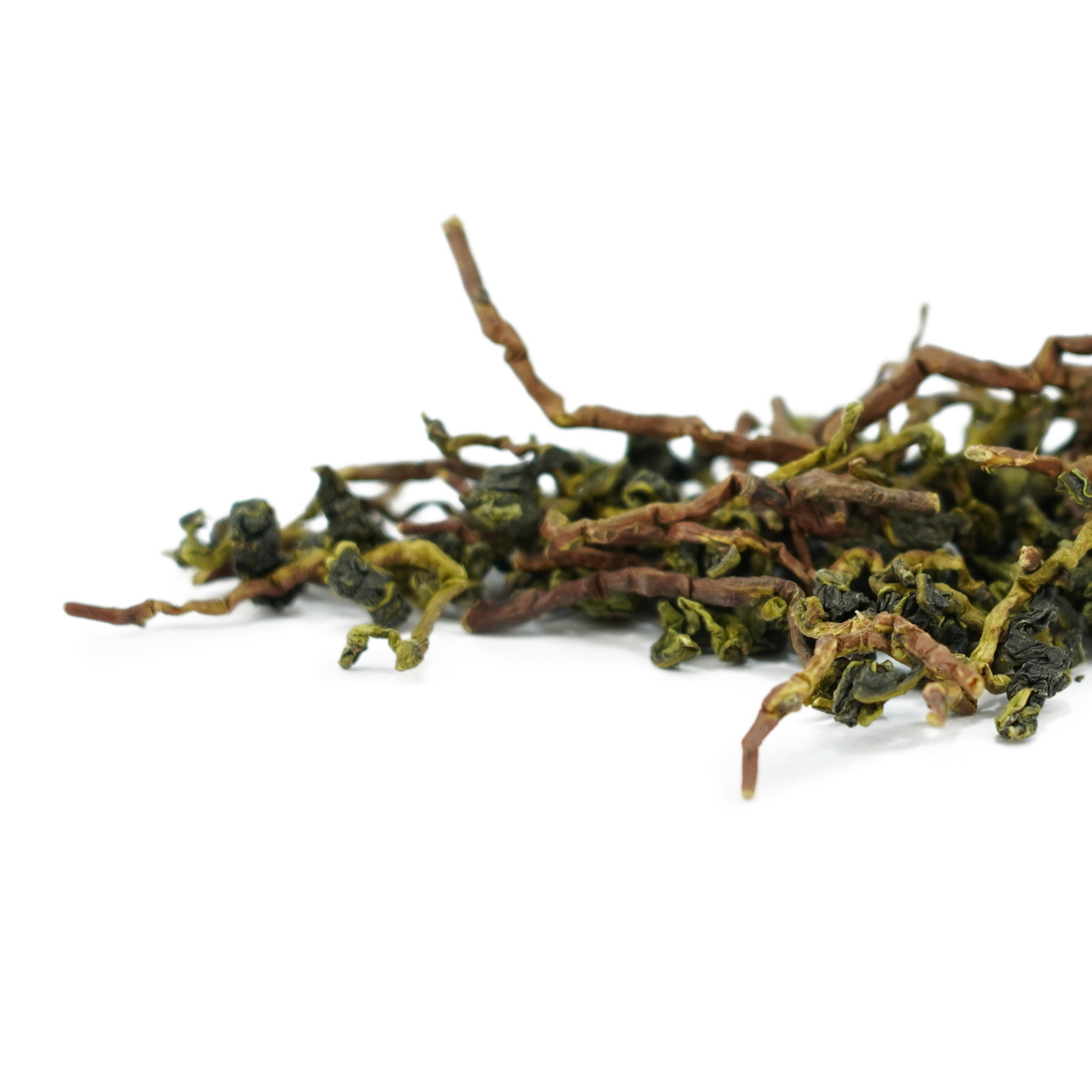
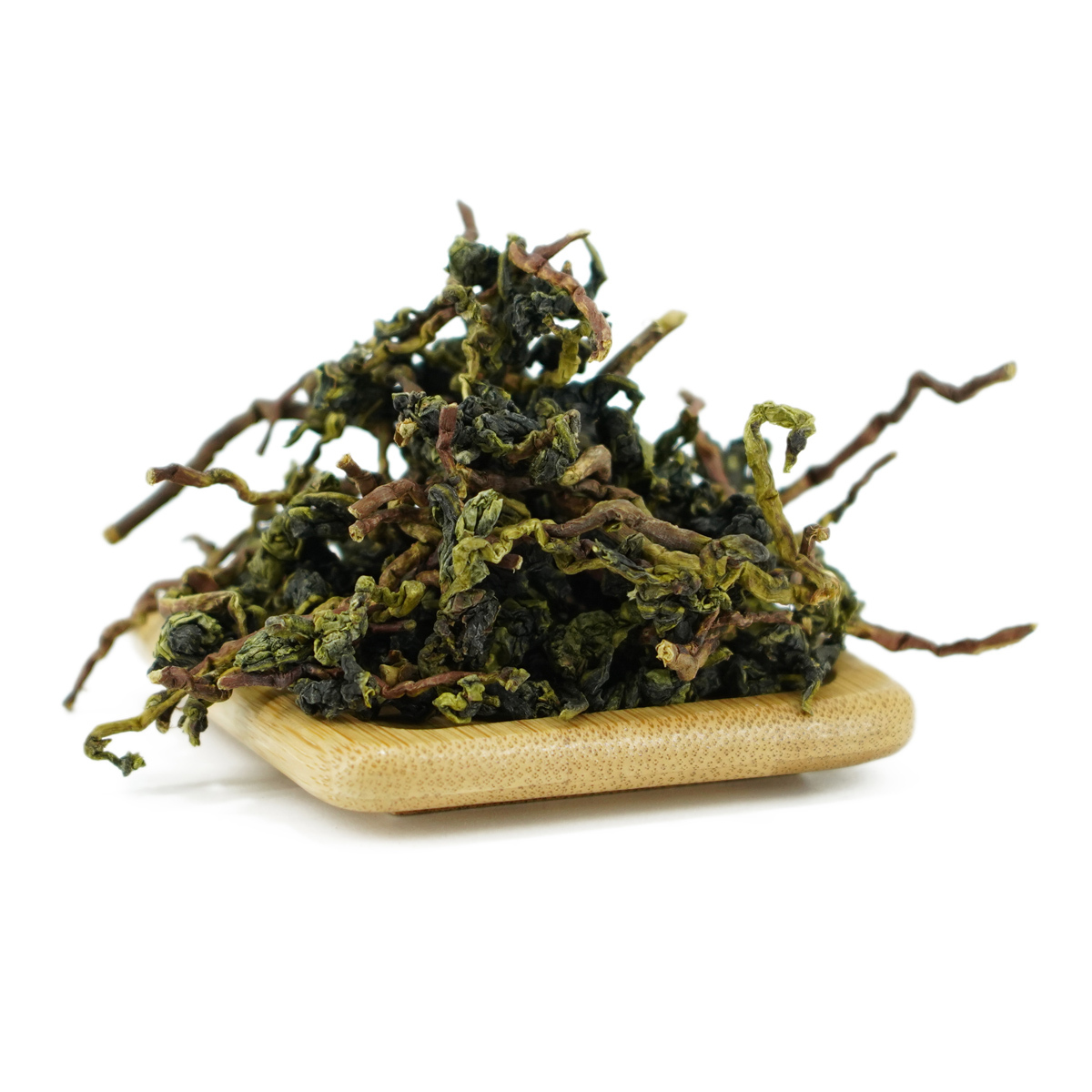
What sets this lot apart is the presence of leaf stems (叶柄) in the raw material. Many modern oolongs have them removed for a cleaner taste and look, but here they remain as part of the traditional style: they add body, sweetness and a light woodiness to the infusion. Judging by the aroma and taste, the tea is made with the Qing Xiang technique, which is light and floral.
Characteristics
- Type: oolong, Tie Guan Yin, Qing Xiang
- Region: Xianghua, Anxi County, Fujian province, China
- Elevation: more than 900 m
- Special feature: the raw material includes leaf stems
- Liquor color: light yellow-green
- Sold: by weight
Aroma and Taste
Dry leaf. An expressive floral scent, often compared to orchid, with honeyed or creamy shades. The aroma is strong and lasting.
Infusion. A strong, smooth and slightly sweet taste with floral, fruity and light vegetal notes; the stems add a woody shade.
Aftertaste. Lightly astringent, long and slightly sweet.
Why You'll Love It
- a more substantial, traditional take on Tie Guan Yin;
- can be brewed many times;
- the floral profile appeals to fans of Anxi oolongs;
- a good way to explore the differences between Tie Guan Yin styles.
How to Brew
Gongfu brewing (gaiwan or small teapot):
- leaf: 6 g per 100–120 ml;
- water: 90–95 °C;
- first infusion: 10–15 s, then add a few seconds each time.
Western-style brewing (teapot or heat-resistant mug):
- leaf: 3 g per 200 ml;
- water: 90 °C;
- time: 2–3 min.
A gaiwan or a Yixing teapot works best. For a fuller taste, increase the amount of leaf, but do not over-steep the infusion.
Storage
Store the tea in tightly closed packaging in a dry, cool place, away from direct light and foreign odors.
