 EN


To relax and calm the nervous system with Chinese tea, it is enough to choose one of the proven varieties, among which medium- and heavily-oxidized oolongs, aged pu-erhs and delicate white teas stand out in particular. If you are looking for Chinese tea for relaxing the muscles and easing emotional tension, take a look at Tie Guan Yin, shu pu-erh or Yue Guang Bai. Each of these drinks works in its own way, but all of them help restore inner balance without sudden drowsiness or, on the contrary, overstimulation. Let’s go through the main groups and specific varieties.
Relaxing varieties of Chinese tea
Oolongs for harmony and calm
- Tie Guan Yin. This famous light oolong with a floral aroma has a unique effect: it calms without switching you off, gently focusing attention. Thanks to its high L-theanine content, Tie Guan Yin helps ease the tension in the neck and shoulders that often appears under stress. Brewed lightly (3–4 grams per 150 ml, water temperature 80–85°C), it is ideal for evening tea time and meditation.
- Milk oolong. Jin Xuan. This Taiwanese variety with a natural creamy taste is gentler than all other oolongs. It does not energize but gives a feeling of warmth and coziness, quickly taking the edge off anxiety. Thanks to its low caffeine content, Jin Xuan can be drunk even a couple of hours before bed. The main effect is emotional evenness and a light creative mood.
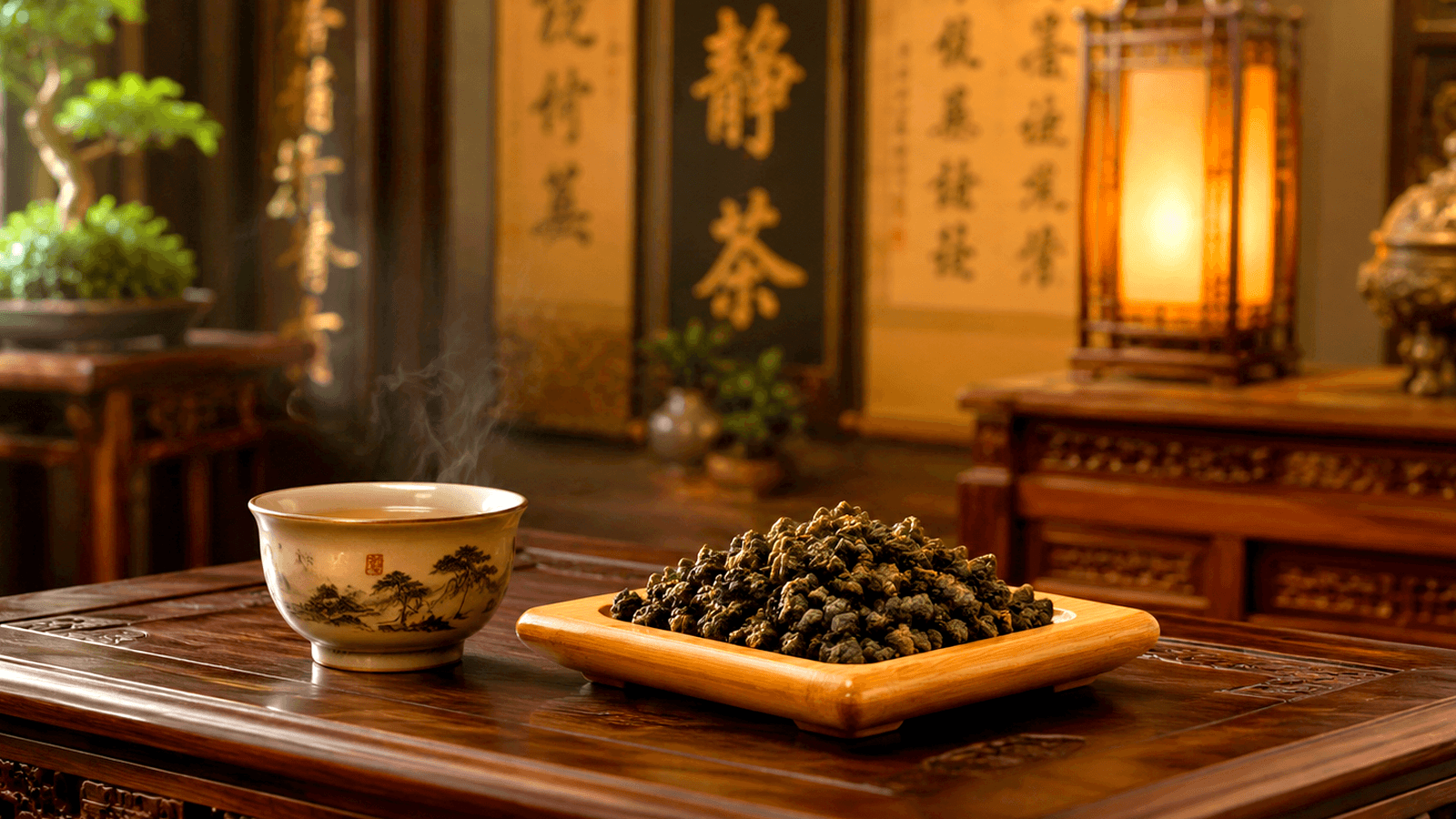
- Da Hong Pao. A heavily oxidized oolong from the Wuyishan rocks combines a warming effect with muscle relaxation. It is said to help with tension headaches and gives a feeling of being “grounded.” Da Hong Pao is best brewed with freshly boiled water (95–100°C) and drunk in the first half of the evening, as it still has a slight energizing effect.
Pu-erhs for deep relaxation
- Shu pu-erh for physical calm. Dark fermented pu-erh is the champion at releasing bodily tension. It relaxes the muscles, brings a pleasant heaviness to the limbs and prepares you for sleep. Shu pu-erh is not for the morning if you need to be active, but for an evening after a hard day it is ideal. Brew it with boiling water (100°C) and let it steep for 2–3 minutes.
- Sheng pu-erh for mindfulness. Young green pu-erh works differently: it calms the mind but keeps it clear. Sheng pu-erh helps let go of intrusive thoughts without causing drowsiness. It can be drunk during the day, when you need concentration without stress. However, strong sheng pu-erh can be energizing, so in the evening stick to a weaker brew (2 grams per 200 ml).
White teas for tranquility
- Bai Mu Dan. This white tea made from buds and first leaves contains almost no caffeine. It is gently calming and cooling, and softens irritability. Bai Mu Dan can be drunk at any time of day, including late in the evening. Its brew is clear, with a honey-floral aroma.
- Yue Guang Bai. “Moonlight” – a legendary variety with a light sleep-supporting effect. Thanks to special shade drying, it retains the maximum amount of calming essential oils. Yue Guang Bai helps you fall asleep quickly and makes sleep deeper. It is the best choice for those who struggle with evening anxiety.
- Shou Mei. An affordable and rich white tea made from coarser leaves. It gives a pronounced relaxing effect, comparable to a light herbal blend. Shou Mei is great for everyday drinking and costs less than the elite varieties.
Many people mistakenly think a relaxing tea must be white or a lightly oxidized oolong. In practice, the strongest muscle-relaxing tea of all is aged shu pu-erh. Thanks to microbial fermentation, unique compounds form in it that are said to act on GABA receptors, releasing chronic tension in the back and neck. Tie Guan Yin, on the other hand, contrary to the myth, works better not as a sleep aid but as an “anti-stress for waking hours”: it takes away anxiety but leaves you able to work. If your goal is to fall asleep quickly without your thoughts “rewinding,” reach for Yue Guang Bai. If you need to relax but not drop out of the evening – milk oolong or a weak Tie Guan Yin.
Hanna Vasileuskaya, blog editor at the Tea24 online store
Comparison table of relaxing teas
| Tea variety | Type | Main effect | Best time to drink |
| Tie Guan Yin | Oolong (light) | Easing muscle tension, mental clarity | Evening (2–3 hours before bed) |
| Milk oolong | Oolong (medium oxidation) | Emotional calm, coziness | Second half of the day, early evening |
| Da Hong Pao | Oolong (heavy oxidation) | Warming, muscle relaxation, grounding | Evening (no later than 2 hours before bed) |
| Shu pu-erh | Pu-erh (dark) | Deep physical relaxation, drowsiness | Evening, before bed |
| Sheng pu-erh | Pu-erh (light) | Calming the mind without drowsiness | Daytime, first half of the evening |
| Bai Mu Dan | White tea | Softening irritability, cooling | Any time, including late evening |
| Yue Guang Bai | White tea | Preparing for sleep, light sleep-supporting effect | 30–60 minutes before bed |
| Shou Mei | White tea | Everyday calm, affordability | Evening |
How to choose a tea for your state

If you need to quickly release physical tension after work – choose shu pu-erh or Da Hong Pao. When emotions run high and it is too early for bed – milk oolong or Bai Mu Dan will help. For deep evening meditation and preparing for sleep, the best choice is Yue Guang Bai or Shou Mei. And if you want to calm down but stay productive (for example, while working on a creative project), brew sheng pu-erh or a weak Tie Guan Yin.
Chinese tea is not just a drink but a subtle tool for managing how you feel. Three categories are best for relaxation and calm: medium- and heavily-oxidized oolongs (Tie Guan Yin, milk oolong, Da Hong Pao), dark pu-erhs (especially shu pu-erh) and white teas (Bai Mu Dan, Yue Guang Bai, Shou Mei). Remember that even the calmest tea can be energizing if you brew it too strong or drink it on an empty stomach. Start with small amounts (2–3 grams per 200 ml) and listen to your body. Experiment, and you will surely find your perfect variety for quiet evenings and restful sleep.


