 EN


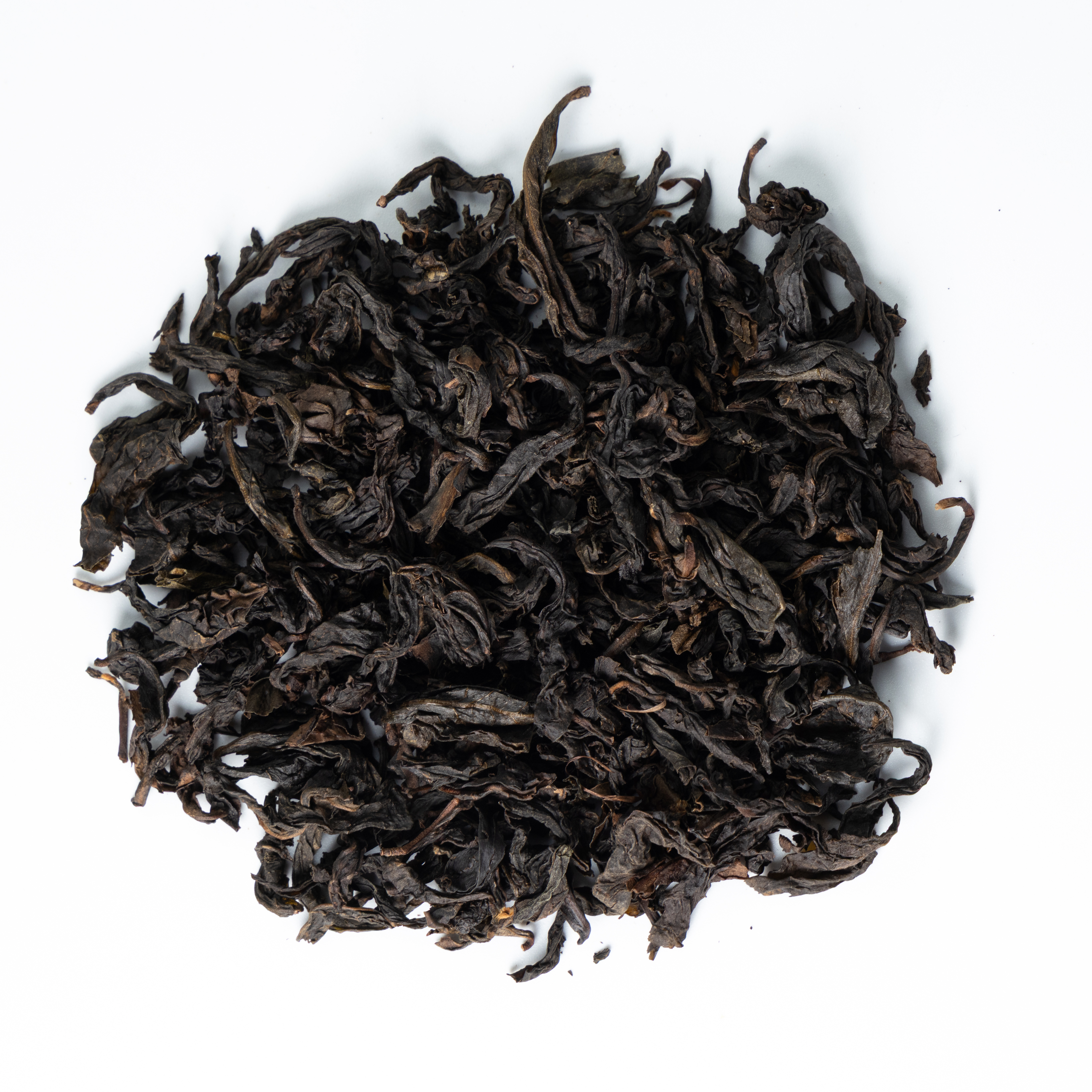
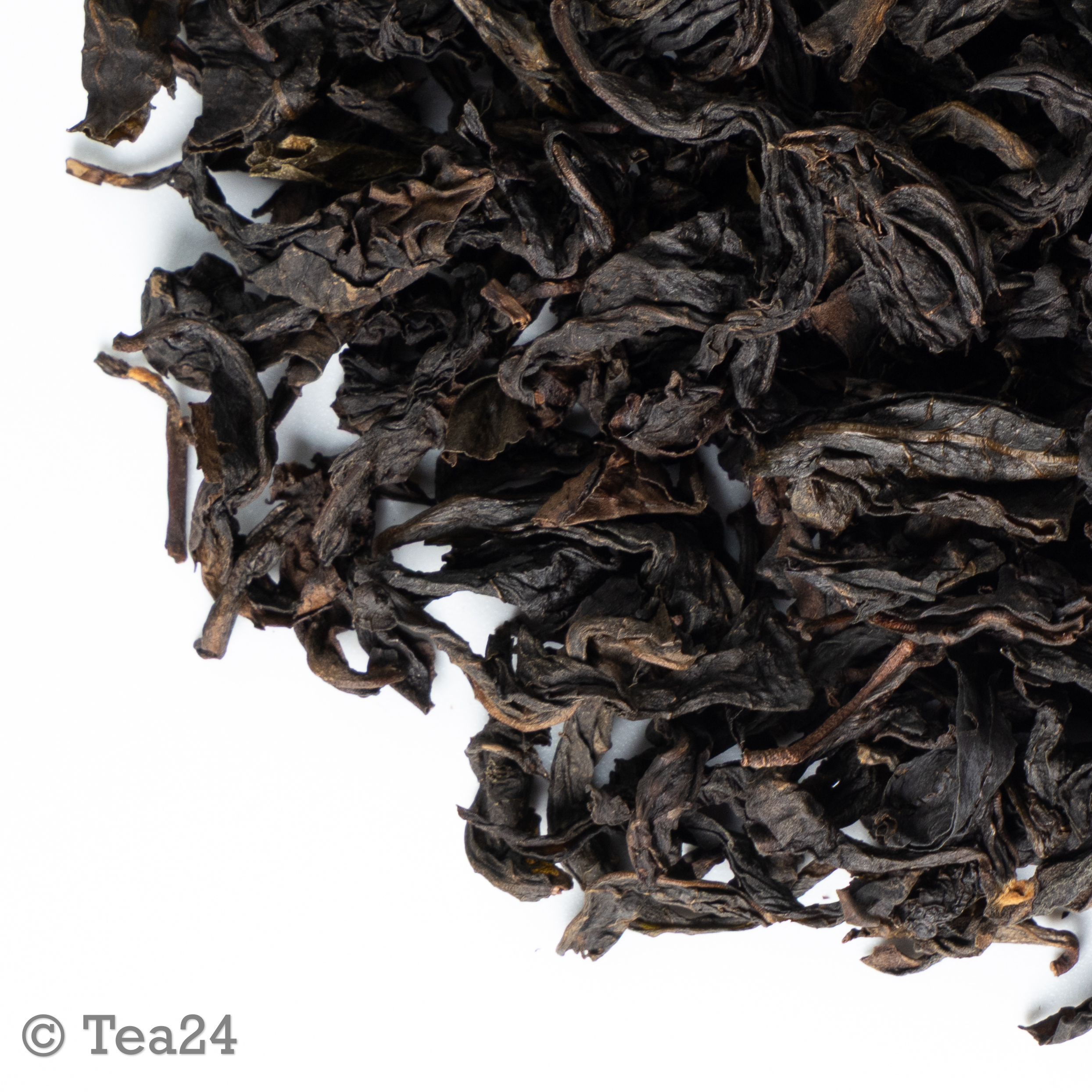
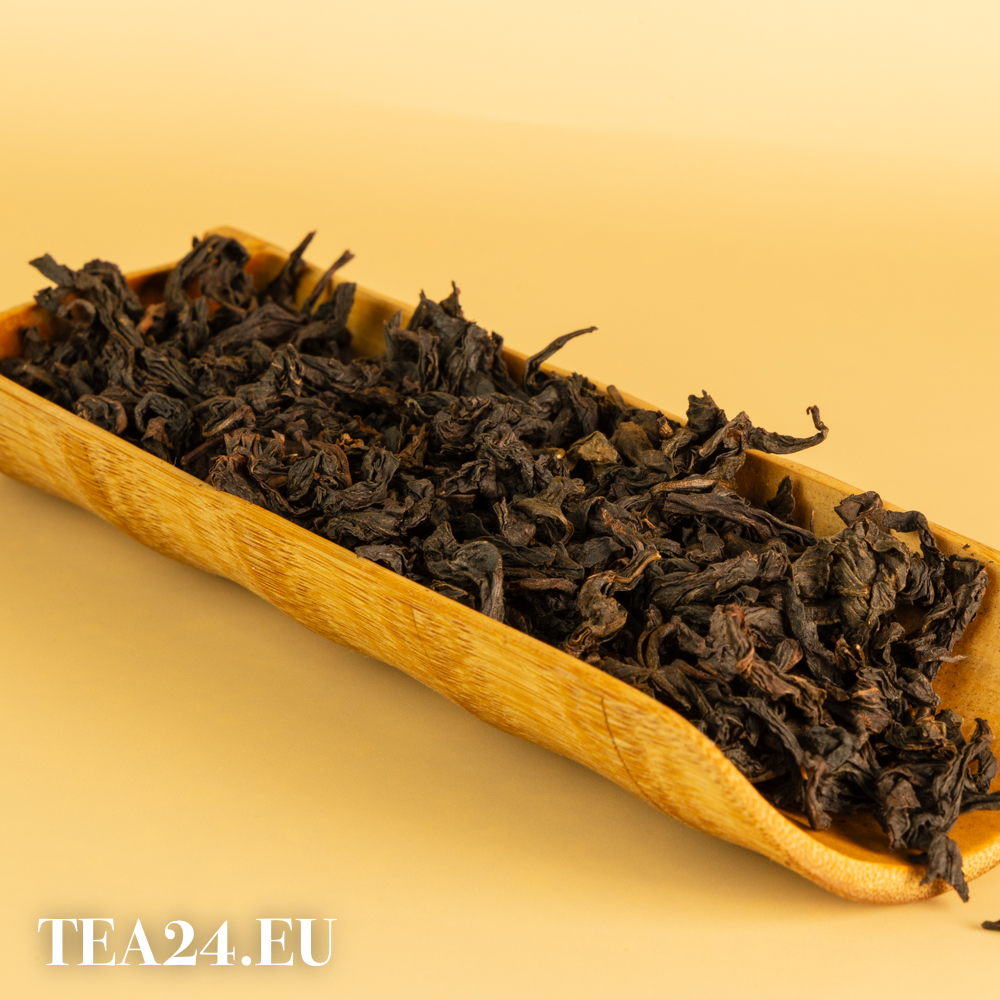
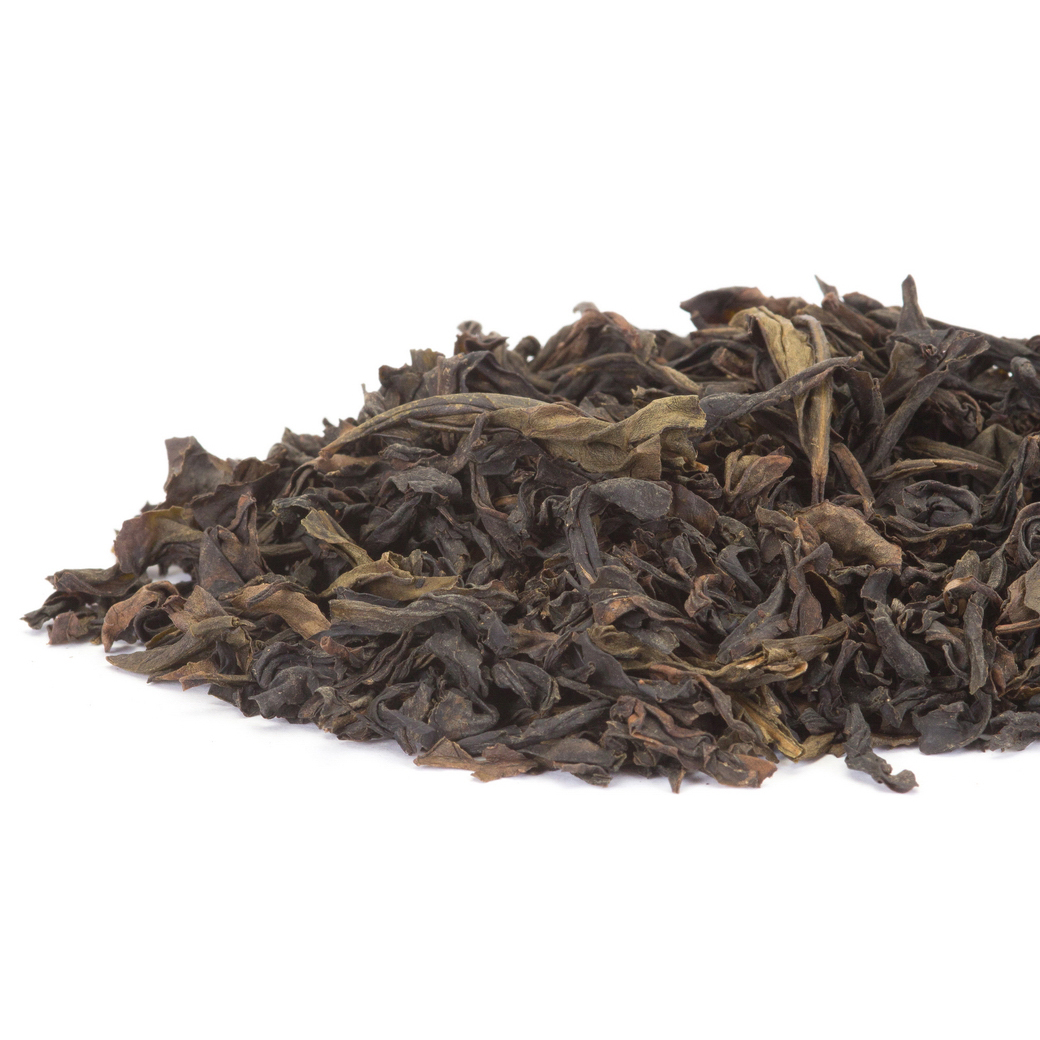
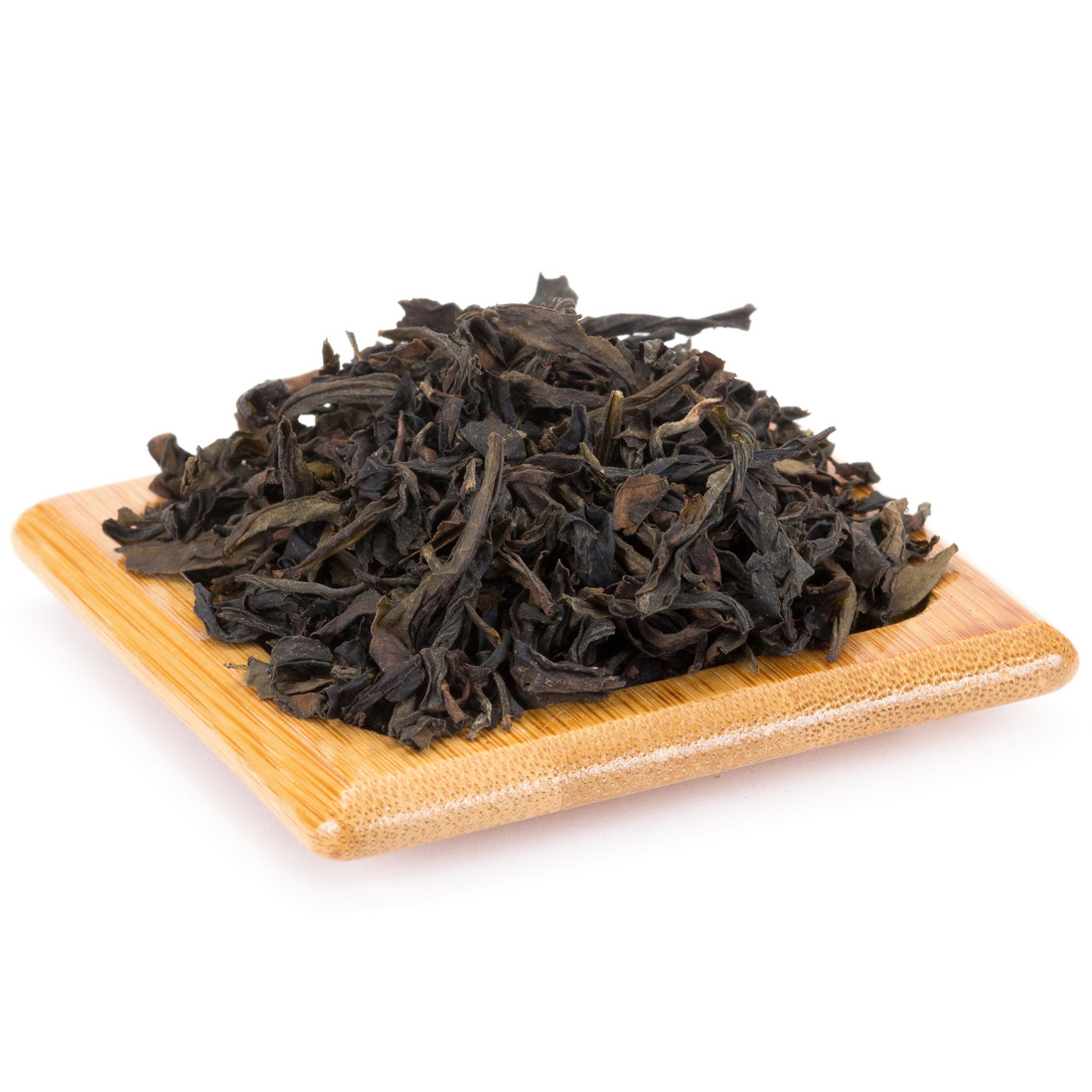


Da Hong Pao (literally "Big Red Robe") is one of the most famous Chinese oolongs. It is made in northern Fujian province, in the Wuyi Mountains. This lot belongs to the Qing Xiang series and is number 5.
The historic "mother" bushes no longer yield tea for sale, so today the name is used for tea from cuttings grown from the old plants. Most often the base is the Rou Gui and Shui Xian cultivars, and the finished blend is put together by a master tea maker. Two legends are tied to the name: one about a student rescued by a monk who covered the bushes with a red robe, and one about monkeys in red clothes trained to pick leaves from the cliffs.
Characteristics
- Type: oolong (rock tea)
- Region: Wuyishan, northern Fujian province, China
- Series: Qing Xiang, grade 5
- Ingredients: a blend of leaves, 100% tea leaf
- Form: loose leaf tea, sold by weight
- Country: China
Aroma and Taste
Dry leaf. Twisted dark leaf; when warmed in a gaiwan it opens with warm, rich roasted notes.
Infusion. The infusion is rich and warming, with a soft mineral base and notes of baked bread and dried fruit; a dense, rounded body.
Aftertaste. Long and warm, with a light sweetness that lingers after several infusions.
Why You'll Love It
- opens up well over many gongfu infusions;
- warms you on a cold evening and invigorates without harshness;
- works both as an introduction to rock oolongs and for experienced tea lovers;
- keeps well for a long time in a dry, cool place.
How to Brew
Gongfu brewing (gaiwan or small teapot):
- leaf: 7 g per 100–120 ml;
- water: 90–95 °C;
- first infusion: 5–10 s, then add a few seconds each time.
Western-style brewing (teapot or heat-resistant mug):
- leaf: 2 g per 200 ml;
- water: 90 °C;
- time: 3–5 min.
You can pour off the first infusion as a quick "wake-up" rinse: it warms the leaf and opens the aroma.
Storage
Store the tea in tightly closed packaging in a dry, cool place, away from direct light and foreign odors.
