 EN


The main types of dark oolong tea fall into three large groups: Wuyi rock oolongs (Da Hong Pao, Rou Gui, Shui Xian), Guangdong Dan Cong oolongs (with aromas of orchid, honey and almond) and Taiwanese dark oolongs (Dong Fang Mei Ren). Within each group there are dozens of varieties that differ in degree of roasting, flavor and aroma.
What is dark oolong?
Dark oolong is a heavily oxidized Chinese tea (40% to 70%) that sits between light oolongs and black teas in terms of oxidation. It differs from its lighter relatives not only in flavor but also in technology: the final stage of production is slow roasting over charcoal.
Charcoal roasting is not just a way to finish drying the leaf. It is alchemy. When a light oolong, after oxidation, goes into baskets over smoldering charcoal, its polyphenols caramelize, the essential oils transform, and moisture leaves evenly and slowly. This is how notes of dark chocolate, roasted nuts, caramel and a hint of smoke are born. Without charcoal roasting there would be neither Da Hong Pao nor Oriental Beauty. It is that very “special touch” that turns an ordinary oolong into a “black dragon.”
Hanna Vasileuskaya, blog editor at the Tea24 online store
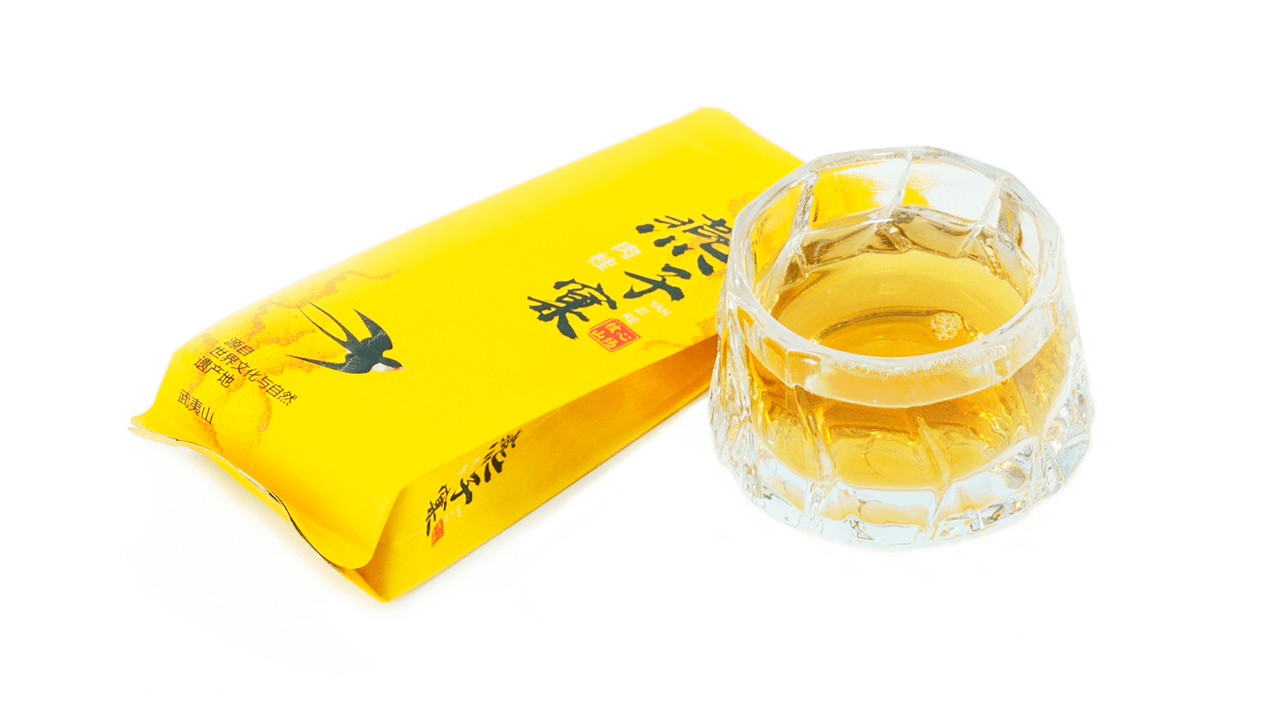
Why is it called the “black dragon”?
The name “oolong” translates as “black dragon.” There are two versions: according to one, the dark leaves, twisted lengthwise, resemble a writhing dragon; according to the other, the first masters who tasted this tea compared its smoky, powerful flavor to the breath of a mythical beast.
Main types of dark oolong
Wuyi rock oolongs
These are the best-known and most expensive representatives. They are grown in the Wuyi mountains, where volcanic soil gives the tea a special “rock” flavor — dense, mineral, with a long aftertaste.
Key varieties:
- Da Hong Pao (“Big Red Robe”). A legendary tea, an elite variety with a rich flavor of dark chocolate, nuts and a light hint of smoke.
- Rou Gui (“Cinnamon”). A spicy, warming tea with a vivid aroma of cinnamon bark and a long, sharp aftertaste.
- Shui Xian (“Water Immortal”). Softer and more velvety, with notes of orchid and honey. Good when aged.
- Tie Luohan (“Iron Arhat”). A rare variety with a powerful, astringent flavor and the aroma of meadow herbs.
Guangdong Dan Cong oolongs
These teas are made from the leaves of old trees (sometimes more than 100 years old), and each bush is considered unique. The name “Dan Cong” means “single bush.” The main feature is natural aromas that appear without any additives.
Popular aromatic sub-varieties and their flavors:
- Mi Lan Xiang. Honey orchid — sweet, floral, with a honeyed shade.
- Huang Zhi Xiang. Floral and honeyed — notes of acacia, caramel, warm bread.
- Xing Ren Xiang. Almond — delicate, with a bittersweet almond shade.
- Zhu Ye Xiang. Bamboo leaf — fresh, green, with a light astringency.
Taiwanese
Taiwanese dark oolongs are softer and more caramelly than mainland ones. They are often roasted more lightly, preserving more floral notes.
The main representative is Dong Fang Mei Ren (“Oriental Beauty”).
A unique tea whose leaves are bitten by leafhoppers. In response the plant releases special compounds, and notes of honey, peach, blackcurrant and freshly baked bread appear in the finished drink. The degree of oxidation is high (up to 70%), and the color of the brew is amber-red.
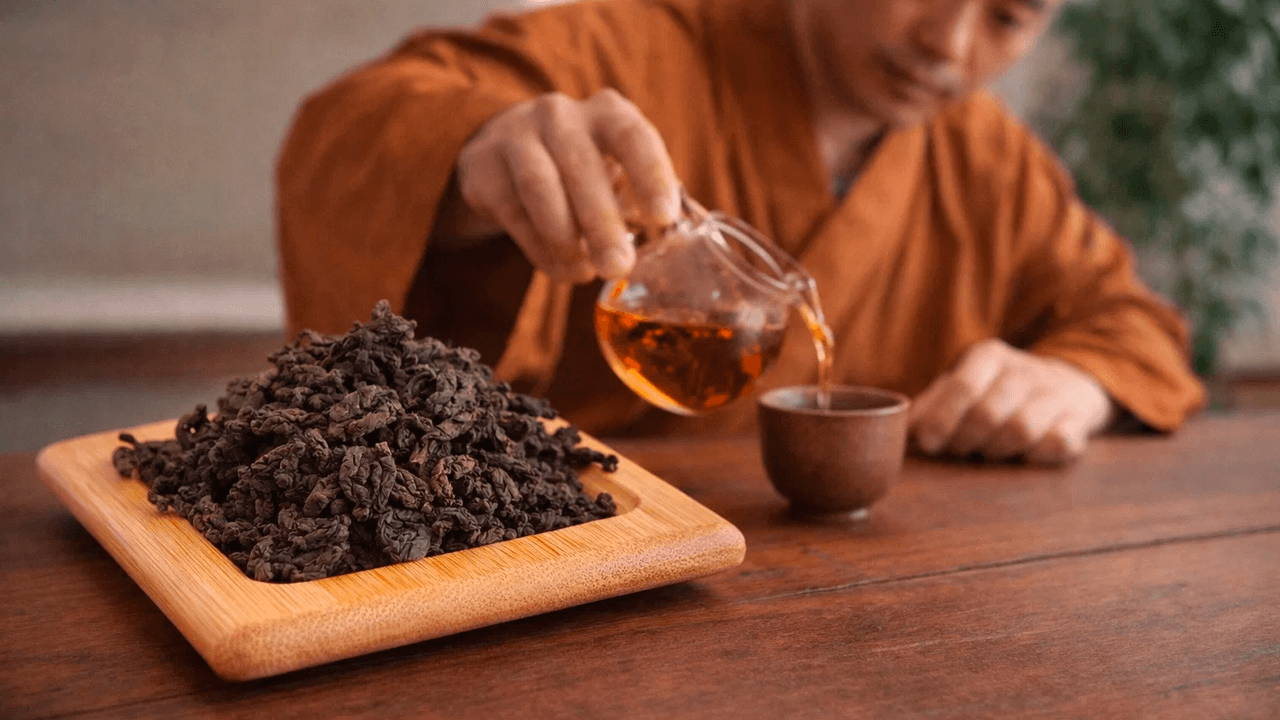
What people like about dark oolong
Here is what regular drinking of this tea is said to offer (2–3 cups a day, not on an empty stomach):
- Digestion. Dark oolong is traditionally drunk to help digest rich, fatty food. In China it is often served after a hearty lunch.
- Warms and energizes. Thanks to its heavy oxidation and roasting, the tea has a strong warming effect. It energizes more than light oolongs but more gently than coffee — without overstimulation.
- Cholesterol. Studies suggest that the polyphenols in dark oolongs may help lower “bad” cholesterol and improve the lipid profile.
- Antioxidants. Dark oolongs have fewer antioxidants than green tea, but still enough to help counter oxidative stress.
Cautions and contraindications for dark oolong
Dark oolongs are a strong stimulating drink, so they are not suitable for everyone.
- High blood pressure. Caffeine can raise blood pressure in people with hypertension. If your pressure is above 140/90, drink no more than one cup of a weak brew.
- Pregnancy and lactation. Caffeine crosses the placenta and passes into breast milk. Doctors recommend no more than 1 cup a day or giving it up entirely.
- Insomnia. Do not drink dark oolong after 4 p.m. if you have trouble sleeping.
- Anemia. Tannins bind iron. Drink tea between meals, not while eating.
- Ulcers and gastritis. Strong tea irritates the stomach lining during a flare-up.
How dark tea is made
The process of making dark oolong includes several stages:
- Withering — the leaves lose moisture in the sun or indoors.
- Rolling — the cell walls are broken down to start oxidation.
- Oxidation — the leaves oxidize under the master’s control to the desired degree (40–70%).
- Fixation — heating stops the oxidation.
- Roasting (Hongbei) — the key stage for dark oolongs. The leaves are slowly roasted over charcoal for anywhere from several hours to a full day. The stronger the roast, the darker the brew and the richer the flavor, with notes of smoke, caramel and nuts.
How to brew dark oolong
Dark oolongs forgive a beginner’s mistakes more than light ones, but there are still some rules.
Temperature and teaware
- Water: 85–95°C. Wuyi rock oolongs can be brewed with boiling water (100°C), while Guangdong and Taiwanese ones are better with water cooled slightly.
- Teaware: clay teapots made of Yixing clay are ideal (they accumulate aroma); a porcelain gaiwan or a glass teapot will also do.
- Proportion: 5–7 g of dry tea per 150–200 ml of water.
Step-by-step instructions
- Warm the teapot with boiling water.
- Add the tea and cover with hot water for 5–10 seconds. Pour it off immediately — this is the “awakening” and cleansing of the leaf.
- Pour water over the leaves again. Steep for 20–40 seconds for the first infusion.
- Pour into cups. Do not keep the leaves sitting in the water.
- Good dark oolong withstands 5–10 infusions. Lengthen each following infusion by 10–15 seconds.
Dark oolong is not just tea but a whole world with three main regions: the bold Wuyi rock oolongs, the aromatic Dan Cong from Phoenix Mountain and the delicate, caramelly Taiwanese varieties. If you like rich, warming drinks with smoky, nutty and spicy notes — start with Da Hong Pao. If you want an aromatic adventure — try Mi Lan Xiang (honey orchid). And remember: properly brewed dark oolong opens up with every new infusion, like a good book. Drink it in the first half of the day, not on an empty stomach, and it will give you warmth, energy and mental clarity.
Frequently asked questions about dark oolong
What is the effect of dark oolong?
Dark oolong (heavily roasted) has a rich, smoky flavor and an energizing effect: it warms, is traditionally drunk to aid digestion and is said to speed up metabolism and help lower cholesterol thanks to its polyphenols.


