 EN


Imagine a tea that doesn’t just invigorate but gently brings focus to the mind and opens up room for thought. This is not a fantasy but a very tangible experience offered by the unique Gaba oolong. However, its magic is capricious: rough handling with boiling water kills both the flavor and the tea’s qualities. The secret to unlocking its full potential lies in precise control of temperature and time. Let’s go through three key brewing methods — from the classic multi-infusion style to the lazy thermos — and work out which one suits you best.
What is Gaba oolong and why does it need a special approach?
Before pouring water, it is worth understanding what we are dealing with. GABA is gamma-aminobutyric acid, a key inhibitory neurotransmitter of our nervous system. Gaba oolong tea is made using a special oxygen-free fermentation technique that increases the content of this acid in the leaf tens of times over. The result is a drink with a distinctive taste (notes of red berries, dried fruit and spicy wood) and a noticeably relaxed yet clear character. It is precisely this fragile GABA that breaks down at temperatures above 90°C. That is why the main rule is no boiling water. The ideal range is 75-85°C.
Gaba oolong follows the principle “the more valuable, the more delicate.” Unlike many dark oolongs, which tolerate boiling water, GABA tea demands almost gentle, childlike handling. Why? Because gamma-aminobutyric acid is not a tannin resin but an amino acid. Above 90 degrees its molecular structure starts to degrade, and you lose the very character this tea is prized for. But the paradox lies elsewhere: if you brew Gaba with water that is too cold (below 70 degrees), you will not extract the polyphenols and the taste will stay flat. So the 75–85°C window is not a whim but a requirement of the tea’s chemistry.
Hanna Vasileuskaya, editor of the Tea24 online store blog
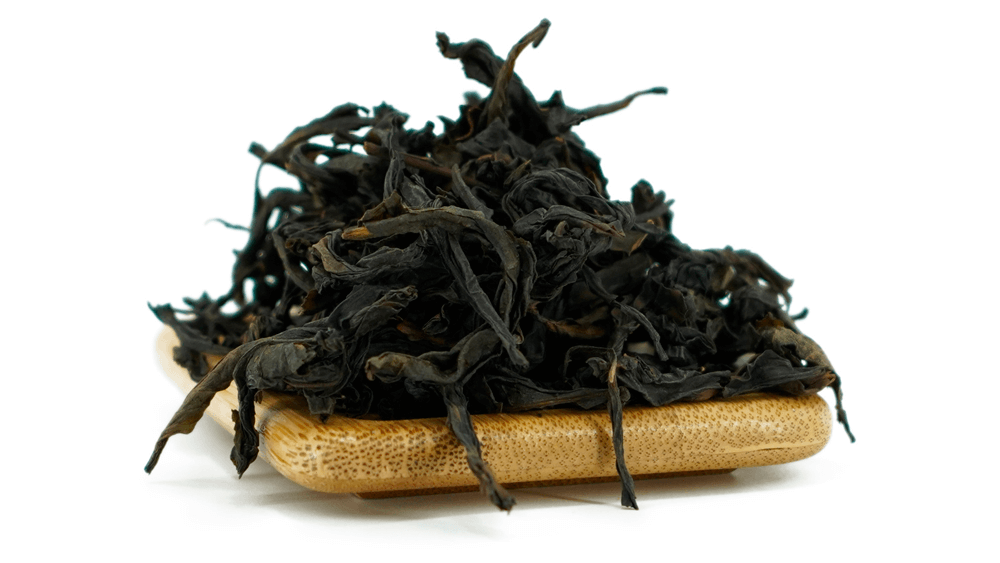
It is important to tell real Gaba oolong from imitations. Its leaf is dark brown, almost black, rolled into dense little balls. The infusion ranges in color from amber to deep ruby. If you are offered a greenish or very pale tea under this name, it is most likely a different variety.
Brewing in multiple infusions
This method is the gold standard for connoisseurs. It lets you follow how the taste and aroma of the tea transform from the first infusion to the last, drawing out as much flavor as possible. You will need a small teapot (preferably Yixing clay or porcelain) of 100-150 ml and a chahai (serving pitcher).
- Preparation and warming up. Rinse the teapot and cups with hot water. Add 5-7 grams of tea (about 1/3 of the teapot). Density is the key point. The first quick infusion with hot water (75-80°C) lasts 2-3 seconds and is poured off immediately. This is the “awakening” of the leaf.
- First infusions. Pour in water again (80°C). The steeping time for the first full infusion is 15-20 seconds. Pour the tea through the chahai into the cups. Pay attention to the aroma: it unfolds gradually. The flavor of the first two infusions is the brightest, with a berry-like acidity.
- Flavor development. With each following infusion, increase the steeping time by 5-10 seconds. Quality Gaba oolong withstands 8-12 infusions. After the 4th-5th infusion the taste becomes deeper and sweeter, and a woody astringency appears. This method is a true meditation and a dialogue with the tea.
Brewing in a teapot
Ideal for those who want to enjoy tea in company without elaborate ceremony. Balance matters here: you need to give the leaf enough space but not over-steep it. Take a porcelain or glass teapot.
Proportions and temperature: for a standard 500 ml teapot, use 7-10 grams of tea. Water temperature is critical — 80-85°C. Let boiling water cool for 4-5 minutes.
Process: pour water over the leaves and cover with the lid. Steep for 2-3 minutes, no longer. Pour the finished tea into cups right away, or transfer it to another vessel so that it does not over-steep. This method gives a rich, unified infusion in which all the shades of flavor blend together. You can re-steep the leaves 1-2 more times, adding 1-2 minutes.
Three brewing methods
To quickly choose a suitable method, use this summary of key parameters.
| Method / Parameter | Vessel | Amount of tea | Water temperature | Time / Number of infusions | Ideal for |
| Multiple infusions (Gongfu Cha) | Small teapot (Yixing clay, porcelain), chahai, tea bowls | 5-7 g (1/3 of the volume) | 75-80°C | 15-20 sec. / 8-12 infusions | Ceremonies, exploring flavor nuances, the full GABA character |
| In a teapot | Porcelain or glass teapot (400-500 ml) | 7-10 g | 80-85°C | 2-3 min. / 2-3 infusions | Company, everyday tea drinking, a balanced taste |
| In a thermos | Glass or ceramic thermos | 3-5 g | 75-80°C | 15-30 min. / 1 long extraction | Trips, the work day, a soft and deep infusion |
Brewing in a thermos
Paradoxically, a thermos is an excellent way to get a deep, soft infusion with the maximum GABA yield, even though it goes against the classic canons. Important: the thermos must have a glass or ceramic flask, not a metal one!
- Preparation: rinse the thermos. Put 3-5 grams of tea on the bottom (less than for a teapot, since the steeping is long).
- Filling: pour in water at 75-80°C. Close the lid.
- Time: steep for 15 to 30 minutes. You can also leave it for several hours — there will be no bitterness thanks to the low temperature. You will get a concentrated, very sweet and velvety infusion that you can drink all day, diluting it with hot water. This is the “brew once, enough for a long time” method.
Critical mistakes that kill the flavor of Gaba
Even following the instructions, you can spoil everything. Here is what to avoid at all costs:
- Boiling water (90-100°C). It destroys GABA and makes the tea astringent and hollow. Always cool the water.
- Long steeping in a teapot. Left for more than 4 minutes? The infusion will turn slightly bitter and the following infusions will be tasteless.
- Too little tea. Gaba demands generosity. A weak concentration will bring out neither the flavor nor the character.
- Metal teaware. Metal can oxidize and give off-flavors. Porcelain, glass and clay are your best friends.
Choose your rhythm and enjoy
As you have probably noticed, Gaba oolong is a democratic tea. Want to dive into tea meditation and catch every note? Your choice is multiple infusions in a small teapot. Need a quick, full-bodied drink for a friendly chat? Brew it in a porcelain teapot. Want a rich, tart elixir of calm at hand throughout the work day? Trust the thermos. In the end, it matters less which method you prefer. It is far more important to remember the sacred rules: low temperature, quality water and the right teaware. Follow them, and you will bring out not only the flavor but also the clear, calm character for which this tea is so prized around the world. Experiment, find your perfect balance and enjoy.
Frequently asked questions about Gaba oolong tea
What is the best temperature for brewing Gaba oolong?
The optimal temperature for brewing Gaba oolong (a heavily fermented oolong) is 95–100°C. This tea handles boiling water well, revealing a deep, rich flavor with woody and caramel notes. For the first infusion you can use boiling water, and for later ones slightly lower the temperature to 90–95°C to avoid excess bitterness. Steep for 10–30 seconds for short infusions.


