 EN


Imagine this: you brew a cup of fragrant milk oolong, smell its delicate creamy aroma and expect something special. But what will you actually get? A burst of energy like after an espresso, or, on the contrary, tranquility like after meditation? This drink is a real chameleon in the world of tea. It is unique in combining seemingly incompatible qualities: it can both perk you up and calm you at the same time. Sounds like a contradiction? Let’s figure out how such an effect comes about and where the catch is.
The secret lies in the biochemistry of the tea leaf and its degree of fermentation. Unlike green or black tea, oolong (and our hero belongs to exactly this family) undergoes partial oxidation. This is the middle path, which preserves as much of the leaf’s character as possible and creates a unique bouquet of active substances. But the main player in our story is not just caffeine but a complex tandem of alkaloids and amino acids.
How milk oolong gives energy without the jitters
When we talk about tonic qualities, many people immediately think of coffee. But the effect of milk oolong tea is fundamentally different. Yes, it contains theine (the very caffeine of tea), and its content can even be higher than in some varieties of green tea. However, this is where L-theanine comes into play — a unique amino acid that works wonders.
Theanine is an amino acid often associated with a state of “calm concentration.” Paired with caffeine, a synergy arises: theine perks you up, and theanine smooths the sharp edges. Many people describe it as mental clarity without nervousness or shaky hands.
Milk oolong is not a compromise between alertness and relaxation. It is a refusal to compromise. Caffeine without theanine is a speedometer needle in the red zone, nerves on edge. Theanine without caffeine is a meditation that makes you drowsy. Together they give that rare state when the brain works like a processor at maximum frequency, yet the cooler makes no noise. That is why Chinese sages drank oolong before calligraphy and playing go.
Hanna Vasileuskaya, editor of the Tea24 online store blog
It is an ideal choice for a morning start or work that requires concentration.
Relaxation and a clear mind in one cup
And what about the calming effect? Many people say that after a cup of this drink they feel tranquil. And that is true too. Everything depends on the concentration and the steeping time. If you steep the leaves a little longer or use more tea, the chemical process goes differently. But the main thing is the ritual.
In the modern world we rarely allow ourselves to simply sit for five minutes and think about nothing. And the process of drinking oolong is a natural meditation. You watch the leaves unfurl and feel a layered aroma in which shades of flowers and herbs mix with the creamy notes. The Chinese use this variety to prepare for important events: it is said to help keep a cool head.
Milk oolong and a balanced diet
The place of milk oolong in everyday eating deserves separate attention. Thanks to its polyphenols and catechins, it is often enjoyed as a pleasant, light companion to meals. Of course, tea alone will not make extra kilograms disappear if you live on fast food, but as part of a balanced diet it can be a nice companion.
For those who watch their health, it is also important to know about a few cautions, so that the drink brings only enjoyment:
- Because of its caffeine and purine content, it is worth skipping the tea during a flare-up of gastritis with high acidity and in cases of gout.
- Pregnant women and children are advised to limit consumption or choose a weakly brewed infusion.
- With insomnia, it is better not to drink it right before bed, although, given its unique qualities, some people fall asleep peacefully even after an evening cup.
How to choose real milk oolong
It is also important to understand the difference between real tea and its flavored sibling. The natural Taiwanese cultivar “Jin Xuan” has only a light, barely perceptible milky hint, which appears thanks to special processing of the leaves. The bright smell of baked milk or toffee that we are used to in the mass market is the result of added chemical flavorings. Such a drink will do no harm, but you should not expect the promised complex effect of “calm alertness” from it.
To avoid a wrong choice, pay attention to a few key points:
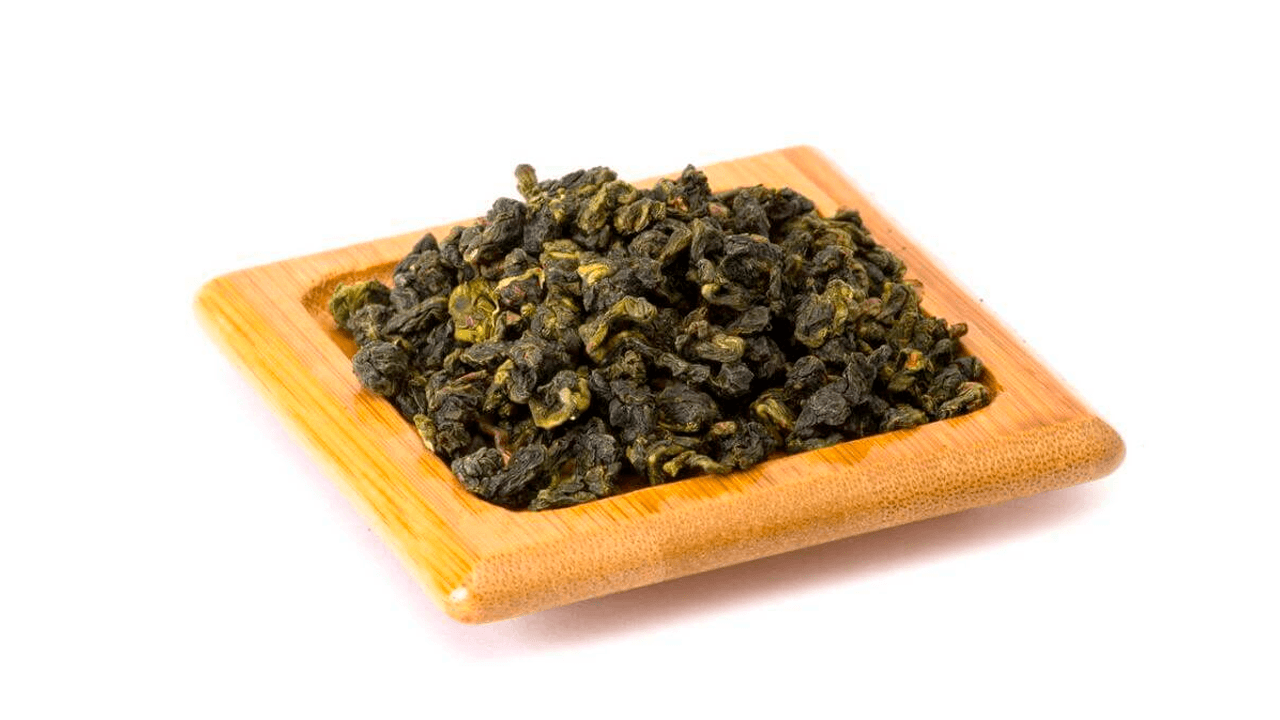
- Appearance of the leaf. Quality oolong is rolled into dense little lumps, which during brewing unfold into whole leaves with dark edges (from fermentation) and a light center.
- Smell. Natural tea smells delicate, with creamy notes intertwined with floral and herbal shades. A sharp “candy” smell gives away a cheap flavoring.
- Price. Good oolong cannot cost next to nothing. It is a labor-intensive tea to produce, requiring hand picking and complex processing.
Brewing subtleties for the best experience
So how do you get the most enjoyment from the drink? The main rule is not to pour boiling water over the leaves. The water should cool to 80–85°C. Water that is too hot will kill the delicate taste, make the infusion bitter and spoil the leaf’s delicate compounds.
There are a few nuances in the brewing process that reveal the full depth of this tea:
- The first infusion is usually poured off after a few seconds to “awaken” the leaves and rinse off tea dust.
- Use porcelain or ceramic teaware, which holds heat well and does not overpower the aroma.
- Good milk oolong withstands up to 5–6 infusions, and each following infusion reveals new facets of taste.
Everything is learned by comparison: start with a small portion, listen to yourself, and you will understand what effect this wonderful drink has for you personally. Experiment with temperature and steeping time to find your own perfect balance of flavor and tone.
Frequently asked questions about milk oolong tea
What can you add to milk oolong for flavor?
You can add honey, vanilla, cinnamon, cardamom, ginger, citrus zest (lemon, orange), lavender, rose petals, coconut milk or syrups (caramel, pistachio, raspberry) to milk oolong. Roasted nuts (almonds, cashews) or dried fruit (apricots, raisins) are also popular for aroma and texture. Experiment with proportions!


